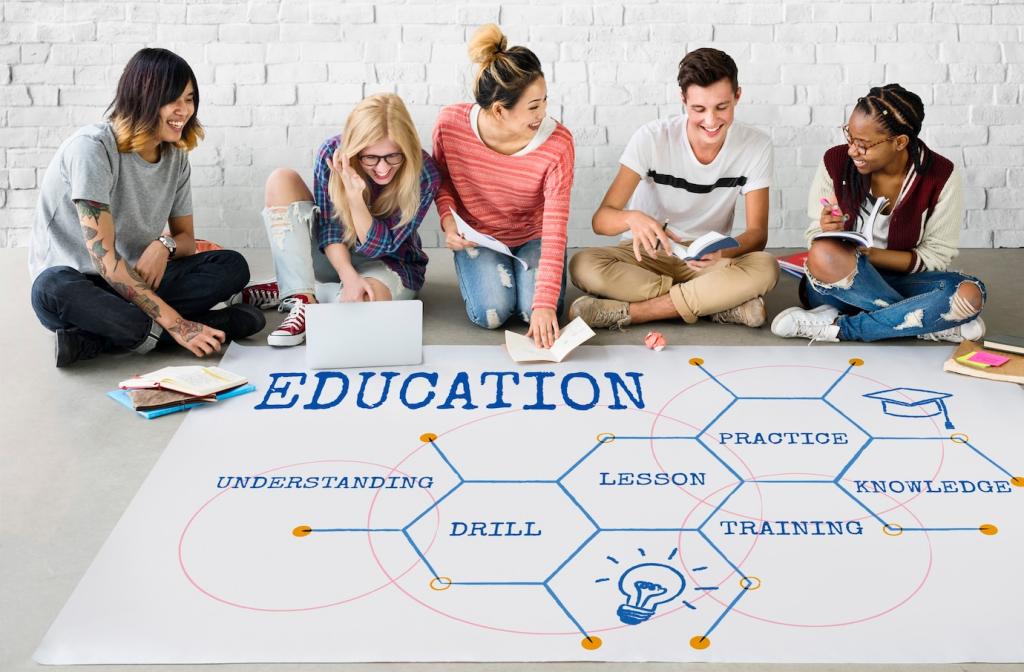

Education Policy Innovations and Their Effects on Economic Progress

Chosen theme: Education Policy Innovations and Their Effects on Economic Progress. Welcome to a space where ideas about schooling, skills, and smart policy meet real-world growth. Together we explore how bold reforms—rooted in evidence, equity, and practicality—turn classrooms into engines of productivity, innovation, and prosperity. Subscribe and join the conversation if you believe better learning can power better livelihoods.

Why Education Policy Innovations Matter for Economies

When policies improve teaching quality, curricula relevance, and time-on-task, students build stronger skills that compound over lifetimes. Those skills raise firm productivity, attract investment, and support faster diffusion of new technologies across sectors.

Why Education Policy Innovations Matter for Economies

A coastal town launched teacher coaching and practical science labs. Within years, graduates filled local apprenticeships, new small firms opened, and families stayed. One policy seed quietly bloomed into a wider employment and tax base.

Causal Pathways: How Better Schooling Fuels Growth

Cognitive skills and innovation capacity

Stronger numeracy, literacy, and problem-solving widen the frontier of what workers can do. Firms adopt more sophisticated processes, managers make data-driven decisions, and countries move up value chains rather than competing only on low wages.

Beyond signaling: genuine productivity gains

Some worry schooling mainly signals perseverance. Yet policies improving classroom practice, teacher expertise, and curriculum alignment consistently show real gains in task performance, not just credentials. That translates into higher output per worker over time.

Trust, institutions, and taxes

Schools socialize cooperation and civic norms. When policy nurtures fairness and inclusion, communities trust public institutions more. That trust can raise tax compliance, stabilize budgets, and fund the next cycle of education improvements and infrastructure.

Policy Designs That Deliver

Short workshops fade. Coaching, mentoring, and classroom-embedded feedback change practice. When paired with clear standards and time for collaboration, teachers sustain gains, and students consistently learn more year after year across subjects.

Policy Designs That Deliver

Updating syllabi with employer input—project-based tasks, digital tools, and communication—bridges school and workplace. Graduates step into roles faster, on-the-job training shortens, and firms report higher retention as skills match real demand.


Technology with a Purpose

Adaptive software supporting foundational skills can accelerate learning when guided by trained teachers. Randomly distributing devices rarely shifts outcomes unless content, pedagogy, and support align to classroom realities and student needs.

Technology with a Purpose

Reliable internet in schools enables modern coursework, remote mentoring, and entrepreneurship exposure. Over time, that connectivity broadens local opportunity, supporting startups, export services, and better integration into global knowledge networks.

Equity as a Growth Strategy

High-quality early learning builds language, self-regulation, and curiosity. These capacities boost later schooling, employability, and health. Investments here often yield large social returns and stabilize growth by widening the skilled workforce.

Skills for the Future of Work

Pair core digital fluency with teamwork, communication, and critical thinking. This blend helps workers re-skill as technologies change, ensuring continuous employability and higher productivity across sectors, from manufacturing to services.
Well-governed apprenticeships link structured learning with paid experience. Employers shape relevant competencies, learners earn while training, and economies benefit from smoother school-to-work transitions and lower youth unemployment over time.
Micro-credentials, flexible schedules, and recognition of prior learning make upskilling practical. Policy can incentivize continuous development through tax credits, public platforms, and partnerships that keep workers future-ready throughout careers.
Kimberlyshella
Privacy Overview

This website uses cookies so that we can provide you with the best user experience possible. Cookie information is stored in your browser and performs functions such as recognising you when you return to our website and helping our team to understand which sections of the website you find most interesting and useful.